

• swap out filter to next issue title

Summer 2026
Alumni in State Optometric Associations
WRITTEN BY:
Sheila Quirke
Most everyone knows of the causality dilemma of the “chicken or the egg,” which seeks to answer the age-old mystery of which came first, said chicken, or said egg. In the field of optometry, there is no dilemma – state optometric associations officially predated the ascension of optometry from a field of practice to the recognized and regulated profession it is today.
How is that known? Because it was the newly formed state associations, one by one, state by state, that worked to have optometry recognized as a profession by licensing boards in each individual state. With the guiding hand and advocacy of state associations, the profession of optometry was finally recognized nationwide in 1924.
Even back in 1898 when the Illinois State Optical Society was formed, its first members understood that if progress were to be made in the field, it would take concerted effort, time, and the dedication of optometrists volunteering their skills and expertise to pave the way for elected officials and others to understand and recognize the importance of this newly emerging yet essential field.

American Optometric Association’s (AOA) main headquarters located in St. Louis, Missouri. A secondary advocacy office is in Alexandria, Virginia.
A hundred and twenty-eight years later, what is now known as the Illinois Optometric Association (IOA) maintains its mission of “Protecting and advancing optometry for the benefit of public health.” The group’s focus has not shifted considerably in all its years. Every other state, as well as the District of Columbia and the armed forces, has their own association with a similar mission of promoting the profession of optometry while simultaneously furthering eye health and patient care.
As the oldest school of optometry in the United States, the Illinois College of Optometry (ICO) has had a stake in generations of alumni joining the ranks of their respective state associations, many rising to the office of president. That includes Brandon Lernor, OD ’12, who is the current president-elect of the Illinois Optometric Association. Dr. Lernor came to the state association early, attending the annual convention as a first-year student at ICO, “It was great,” says Dr. Lernor, “I took on the student liaison position in my second year and coordinated student attendance at meetings. I’ve always been able to talk with people, was on student council – all types of student leadership positions.”
For Lauren Dyak, OD ’14, the introduction to state associations came during her residency with an opthmatology co-management practice in Atlanta, the Woolfson Eye Institute. Her mentor served as a past president of the Georgia Optometric Association (“GOA”) and made it clear that getting involved with the state association was almost a “non-negotiable” term of employment. Dr. Dyak worked under his leadership after accepting a position post-residency and was happy to jump in, “Mentors are so important. I never saw myself as a ‘born to lead’ kind of person, but every young doctor could use a person pushing you out of your comfort zone.” The push worked, as Dr. Dyak is now president-elect of the Georgia Optometric Association and looks forward to leading the GOA’s efforts to support its 800+ members in the coming year.
David Rouse, OD ’92, found his way into state association work when approached by a veteran optometrist (Dr. Howard Braverman, who would go on to become president of the American Optometric Association) with an invitation to lunch early in his career while practicing in Florida. The lunch came with a pitch for the importance of state association work and why it should be considered, “I’ve always had the mindset of giving back and becoming a joiner. You can help shape the profession, or have it shaped for you,” says Dr. Rouse.
Each state optometric association is stand-alone and organized individually, but the membership to leadership trajectory is similar across states. New members are recruited by current members and based on their skills, interests, and availability, are organized into specific committee work. Common committees amongst state associations might include:
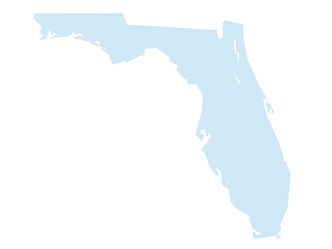

David Rouse, OD ’92
Florida Optometric Association
Former President
Members: 1,700+
“ I’ve always had the mindset of giving back and becoming a joiner. You can help shape the profession, or have it shaped for you.”
-
Membership – recruitment and networking of new and practicing ODs within the state;
-
Legislative – developing policy, strategy, and advocacy plans;
-
Education – planning and executing continuing education offerings;
-
Community Health and/or Public Relations – increasing public awareness of optometry and offering public programs to increase access to optometry;
-
Corporate Affiliates – representing the needs of ODs working in corporate settings.
Once a member has found their path into committee work and gotten a sense of their individual organization and their personal capacity and availability, they can choose what degree of commitment to make. Those who choose more of a commitment might find themselves sitting on the leadership of their local society or county sector before advancing to a statewide leadership seat, often referred to as the Board of Directors, Executive Council, or President’s Cabinet.
Dr. Lernor attended meetings in Illinois’ capital city, Springfield, four times a year as a local society president. In previous years of the IOA, members of the President’s Cabinet would move between committee leadership positions round-robin style to learn about each of their specific roles. A recent re-organization at the state level now allows those in leadership to find the specific committees best suited to their individual skills and interests and lean into them, “We are much stronger now, since our re-org. Our leadership can evolve into their roles rather than move just as they were getting more comfortable and knowledgeable,” says Dr. Lernor, Owner and President at Windy City Eye Care, Inc., in McHenry, Illinois.
After studying in Illinois and practicing in Georgia, Dr. Dyak knows that individual states and their optometric needs vary. “Georgia is a combination of rural, coastal, and urban areas. Depending on where you practice in the state, your needs will change,” she says. Dr. Dyak works to meet the rural needs of South Georgia that are different from the coastal needs of Savannah or the densely populated urban area of Atlanta. “We recently spoke with a member in South Georgia who was trying to hire an associate doctor, but having no luck. It’s hard to hire in those rural areas. What can we do to help?” is a question that is top of mind for her as GOA president-elect.
Dr. Dyak will be the first GOA President to hold an industry position. After working in clinical care since her ICO graduation, Dr. Dyak accepted a position with Tarsus Pharmaceuticals as a Medical Science Liaison in 2025. “The GOA and most state organizations partner with industry” she says, “That partnership money helps cover many of our top-notch CE programs, networking events, and member benefits. Dues alone would never meet that expense. For that reason, transparency is key. If legislation comes up that is a conflict of interest, I will recuse, if needed.”
Dr. Rouse spent time rising through the ranks of leadership in the Florida Optometric Association (“FOA”), including its presidency in 2012, before shifting to SECO International, where he now serves as President after joining in 2014. SECO is an association of eye care professionals in thirteen southeastern states and is known for their educational offerings. All these leadership positions have been done on a volunteer basis, as Dr. Rouse is the owner/operator of Rouse Family Eye Care in Weston, Florida, which he operates with his wife, Linda Rouse, OD ’92 (currently serving as Dean at Nova Southeastern University’s College of Optometry) and another colleague.
When asked how he juggles his volunteer hours with FOA and SECO, Dr. Rouse reasoned it out using a cost-benefit analysis, “A lot of time out of the office can be a negative. I reconciled it by front loading my patients early in the week and thought of my time in FOA leadership as having access to a de facto consultation academy. State associations bring out the best and brightest in the field. I had access to experts in practice management and learned everything I could that helped my own practice.”
Given that two-thirds of all primary eye care in the United States is delivered by optometrists, the current network of state optometric associations have worked tirelessly to advance and support the interests of their members, which number over 35,000 ODs and almost 50,000 total members when including students, assistants, tech members, and professionals within the armed forces.
A main tool that state associations use to further the interests of optometrists is legislation to advance and expand the scope of the field, but also to protect it against other professions or special interests which seek to limit what services and treatments optometrists can be reimbursed for and legally provide. Dr. Dyak and the GOA keep a close eye on these developments, “On any given day, legislation can drop that impacts optometry. Our state association is a unified voice for all optometrists.”
As each state has a defined set of laws and regulations which dictate what procedures, actions, and treatments optometrists are legally allowed to provide under the authority of their state licenses, the scope of practice for optometry has been a shifting landscape. Here are a few examples of what state optometric associations have advocated for in recent years:
-
ODs in all states can prescribe oral medication, though the types of oral meds vary from state to state;
-
ODs in all states can treat glaucoma topically without requiring the co-management of an ophthalmologist;
-
ODS in all states can prescribe oral antibiotics and antivirals for ocular conditions;
-
Some ODs (with additional training and certification) can treat using oral steroids in forty-two states.

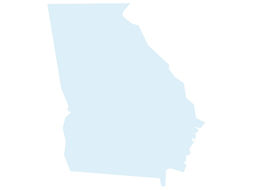
Lauren Dyak, OD ’14
Georgia Optometric Association
President-Elect
Members: 800+
“I recently spoke with a member in South Georgia who was trying to hire an associate doctor, but having no luck. What can we do to help? Is a question at the top of my mind.”
Given these recent changes in scope of practice, state optometric associations are an excellent resource to determine what is possible (and legal) in any given state at any given time. In 2023, the state associations of Florida, Washington, and Texas were successful in increasing their scope of practice, while an effort in California to legalize laser treatment provided by optometrists was vetoed by their Governor. In 2024, South Dakota expanded their scope of practice to include some injections, but not all. And, as of 2024, following the passage of Senate Bill 565, West Virginia optometric scope now includes ophthalmic lasers (such as YAG capsulotomy, SLT, and LPI) and minor surgical procedures.
You could say it takes a village to keep track of these changes, but only if those villages are the individually recognized state associations. IOA President-Elect, Dr. Lernor, keeps it straight easily, “Mission drives everything that we do,” he says, “We represent optometrists plus their patients. Our overall goal is to help. We do this in different ways – advocating for the profession, pursuing legislation, providing the best CE opportunities for our members, and working to pair ODs with lawmakers through our key person network.”
Dr. Lernor is careful to differentiate between lobbying and advocacy, “None of us are political operatives. Our goal is to protect ODs from restrictions and reduce the barriers to providing the care we were trained to provide. Every state is watching what other states are doing and what bills they’ve been able to pass.”


A notable example of a state association seizing the opportunity to help ODs while helping their communities occurred during the COVID pandemic. After Illinois optometrists were granted authority to vaccinate in March of 2021, when the demand for vaccines was running high, there was the question of how and who would train them to meet the need. Dr. Lernor then sat on the IOA Board of Directors and reached out to his father, a local pharmacist, who was thrilled to help train a group of sixty optometrists through a clinic facilitated by the IOA. “It was a nice, touching experience for the both of us,” remembers Dr. Lernor, “It is a perfect example of advocating for optometry and patients simultaneously.”
Brandon Lernor, OD ’12
Illinois Optometric Association
President-Elect
Members: 1,400+
“I took on the student liaison position in my second year and coordinated student attendance at meetings. I’ve always been able to talk with people, was on student council – all types of student leadership positions.”
Dr. Dyak agrees on the relevance of state associations, “They are a merging of the minds for best practices,” she says, “We are the collective voice for optometry. There is a ripple effect between the states. Without a huge time commitment, individuals can speak up or serve. There is no need to operate in complete isolation.” She has seen that when one optometrist benefits, others follow.
Those benefits are personal as well as professional. “Some of my best friends and relationships have come from networking [within the FOA]” says Dr. Rouse, “When you give your time, you are surrounded by winners who are positive, pragmatic, and elevate the entire field.”
If interested in learning more about individual state optometric associations, do an Internet search for your local state, or reach out to the American Optometric Association for a referral.